Stay Weird, Stay Loud: 5 Underground US Alt-Rock Acts That Built Empires by Ignoring the Rulebook
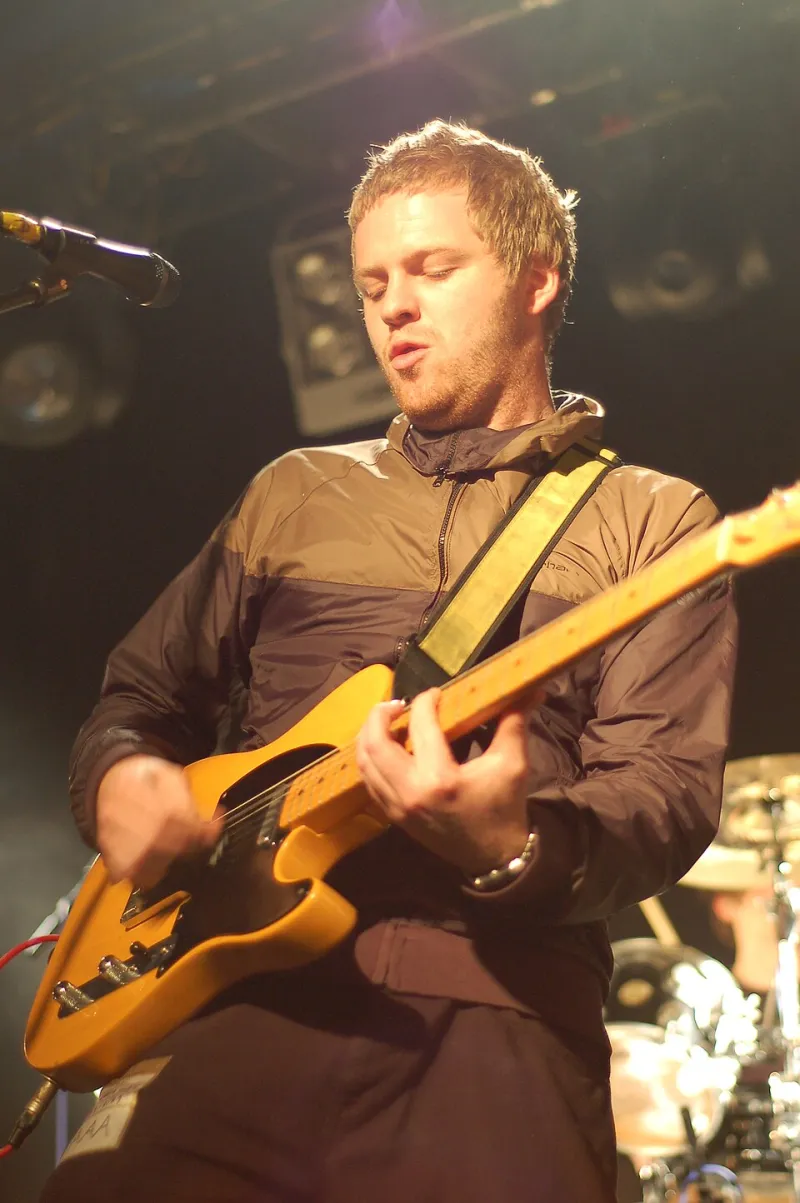
Photo: dearbarbie (金娜 Kim S.)., CC BY-SA 2.0, via Wikimedia Commons
The mainstream music industry has a very specific idea of what a breakout rock or alternative act should sound like in 2024. Accessible hooks. Streaming-friendly song lengths. A sound that sits comfortably between genres without committing too hard to anything that might alienate a casual listener. Keep it clean. Keep it palatable. Keep it safe.
Some bands are doing exactly the opposite — and winning.
Across the US, a wave of alternative and rock acts have built genuine, passionate, large-scale followings by refusing to compromise their sound, their aesthetic, or their weirdness for the sake of radio play or algorithmic favor. They're bass-heavy, experimental, sometimes abrasive, and absolutely magnetic. Here are five of them.
1. Thou (Baton Rouge, Louisiana)
The Sound: Sludge metal meets doom-drenched post-metal, with politically charged lyrics and a production approach that sounds like the earth itself is collapsing in slow motion.
The Path: Thou has been doing this since 2005, and their story is a masterclass in long-game authenticity. They never signed to a major. They self-released prolifically — sometimes dropping multiple full albums, EPs, and splits in a single year — and built a cult following that has gradually become something much larger. Their 2019 collaboration with folk artist Emma Ruth Rundle, May Our Chambers Be Full, introduced them to audiences who'd never touched sludge metal and came away converted.
The Turning Point: Rather than chasing crossover appeal by softening their sound, they found it by collaborating outward from their own identity. The lesson: if your sound is strong enough, it can pull other worlds into its orbit.
What It Means: Thou proves that extreme music doesn't need to become less extreme to grow. It just needs to be undeniable.
2. Show Me the Body (New York City, New York)
The Sound: Hardcore punk filtered through hip-hop production sensibilities, with a banjo as a lead instrument and bass frequencies that feel genuinely threatening. It shouldn't work. It absolutely works.
The Path: Show Me the Body emerged from the New York DIY scene with zero interest in fitting into any existing genre box. Their early releases circulated almost entirely through word of mouth and underground networks. They built their own infrastructure — their collective, Corpus, operates as a label, community hub, and creative ecosystem — rather than waiting for the industry to validate them.
The Turning Point: Their 2019 album Dog Whistle broke through to wider critical recognition without a single concession to accessibility. The album is confrontational, densely layered, and deliberately uncomfortable. It got them on year-end lists at publications that had never covered hardcore before.
What It Means: Building your own infrastructure isn't a fallback — it's a power move. When you own the system, the system can't tell you no.
3. Chat Pile (Oklahoma City, Oklahoma)
The Sound: Noise rock and post-metal with vocals that range from a dead-eyed monotone to a full-body scream, over bass-driven riffs that feel like being slowly crushed by something very heavy.
The Path: Chat Pile came out of nowhere — or rather, out of Oklahoma City, which the music industry had largely written off as a non-market — and landed fully formed with their 2022 debut God's Country. The album felt like it had absorbed every anxiety and ugliness of contemporary American life and converted it into sound. It spread virally through music communities online with almost no traditional press campaign behind it.
The Turning Point: A single Bandcamp page. Genuinely. Their music spread because it was singular and impossible to ignore, not because anyone pushed it. Listeners found it, felt it in their guts, and immediately sent it to everyone they knew.
What It Means: Geography is no longer destiny. If your music hits hard enough, it will find its people regardless of where you're from.
4. Portrayal of Guilt (Austin, Texas)
The Sound: Blackened hardcore and screamo so dense and fast it barely holds its own shape, punctuated by moments of eerie, gothic quiet that make the chaos feel even more violent by contrast.
The Path: Portrayal of Guilt has operated almost entirely outside mainstream channels, releasing through Run for Cover Records and building a following through relentless touring and an aesthetic that is uncompromisingly dark. They've never tried to soften the entry point to their music. If you're not ready for it, that's okay — they'll be here when you are.
The Turning Point: Their 2022 album Devil Music was their most extreme release to date, and it was also their most commercially successful. Going harder, not softer, opened more doors. That's the kind of counterintuitive result that only makes sense if you believe the audience is smarter than the industry gives them credit for.
What It Means: There is a large, hungry audience for music that doesn't apologize for being brutal. They've been underserved for years, and they will be loyal forever to the bands that actually feed them.
5. Militarie Gun (Los Angeles, California)
The Sound: Melodic hardcore with an almost arena-rock sense of scale — huge choruses, earnest emotional directness, and enough low-end weight to remind you this is still very much a punk band.
The Path: Militarie Gun's Ian Shelton came up through the hardcore underground and brought those values — community, DIY ethics, authenticity — into a sound that has genuine crossover appeal without ever feeling engineered for it. Their 2023 full-length Life Under the Gun landed on year-end lists from outlets that don't typically cover hardcore, and their live shows have become known for the kind of full-room energy that feels increasingly rare.
The Turning Point: They never stopped playing small rooms even as the buzz grew. Staying connected to the underground while the mainstream came looking for them, rather than the other way around, gave them credibility that no PR campaign could manufacture.
What It Means: Sometimes the best marketing strategy is refusing to act like you need one.
The Pattern Here Is Pretty Clear
None of these bands broke through by chasing what was already working for someone else. They broke through by being so completely, stubbornly themselves that the audience had no choice but to come find them.
That's not a formula you can reverse-engineer. But it is something you can commit to. And right now, with listeners increasingly burned out on algorithmic pop-rock that sounds like it was assembled by a committee, the appetite for music that feels real — heavy, weird, bass-forward, uncompromising — has never been bigger.
The rulebook had it wrong. Turns out, the weirder you are, the more people are waiting for exactly what you've got.