Room to Room: How Smart Touring Bands Protect Their Sound When Every Venue Fights Back
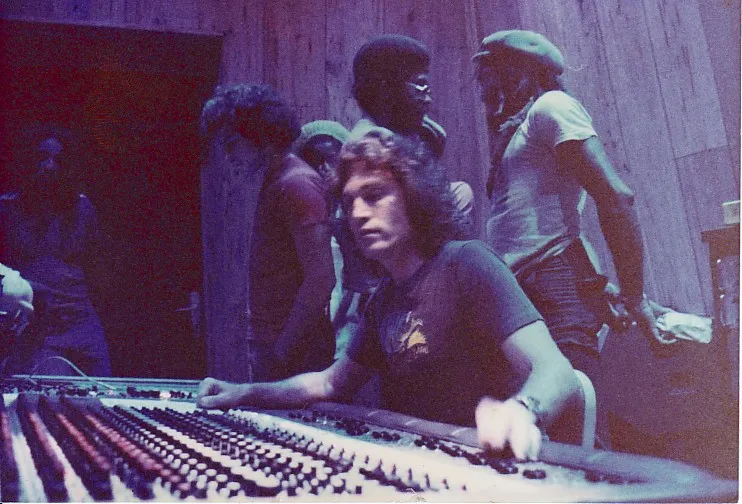
Photo: Skyranger of utopia, CC BY-SA 4.0, via Wikimedia Commons
You've spent months dialing in your sound. The bass sits exactly where you want it — punchy without being muddy, felt in the chest without drowning the mids. It sounds incredible in your practice space. Your demo sounds incredible. Your last hometown show sounded incredible.
Then you walk into a 200-cap venue in Columbus with concrete walls, a low drop ceiling, and a house PA that was last serviced sometime during the Obama administration, and your entire sonic identity becomes a wall of indistinguishable low-frequency mush.
Welcome to touring.
For bands whose sound lives in the low end — and if you're here, yours probably does — playing radically different venues across the US is one of the biggest practical challenges of being a working musician. Every room is an acoustic environment you've never met before, with its own resonant frequencies, its own dead spots, its own weird flutter echo off the back wall. And the bass frequencies that define your sound are the ones most brutally affected by all of it.
This guide is about surviving that — and more than surviving, actually sounding like yourself every night.
Understand What the Room Is Actually Doing
Before you touch a single EQ knob, you need to understand what's physically happening in the space. Sound at low frequencies behaves very differently from high-frequency sound. Bass wavelengths are long — a 100 Hz tone has a wavelength of about 11 feet. That means in a small room, you're often dealing with the sound wave bouncing off walls and interfering with itself, creating what engineers call standing waves or room modes.
In practical terms: there will be spots in the venue where the bass sounds enormous and spots where it almost disappears. This isn't your mix — it's physics. The room has resonant frequencies based on its dimensions, and if those line up with what you're playing, you're going to have problems.
The first thing any touring engineer worth their day rate does when walking into a new venue is walk the room. Literally walk around while someone sends a tone through the PA. You're mapping where the energy is collecting and where it's dying. That information tells you everything about how aggressive you need to be with your EQ.
The Basement vs. The Theater Problem
The two venues that cause the most headaches for bass-heavy touring bands represent opposite ends of the acoustic spectrum, and the fixes are almost mirror images of each other.
Small, hard-walled rooms — your basement clubs, your DIY spaces, your 100-cap bars with brick walls — tend to be acoustically live and bass-heavy. Sound bounces everywhere. Low frequencies build up fast. The mix gets muddy almost immediately, especially if the room is packed with bodies (which absorb some high frequencies but not much low end). In these rooms, your instinct to push the bass is working against you. The room is already doing it. Pull back the sub frequencies, tighten up the low-mids, and let the room do some of the heavy lifting rather than fighting it.
Larger, more acoustically treated rooms — theaters, seated venues, bigger clubs with proper acoustic panels — have the opposite problem. The treatment absorbs a lot of the energy, and the size of the room means bass frequencies travel farther before they hit anyone. In these spaces, you might feel like your sound is getting swallowed. The instinct here is to push, and in these rooms, that instinct is correct — but you have to push selectively. More sub (below 80 Hz) and more presence in the upper bass (around 150-200 Hz) without letting the low-mids (250-400 Hz) get muddy.
EQ Strategies That Actually Work on the Road
There's a reason experienced touring engineers talk about subtractive EQ like it's gospel: it's almost always better to cut problem frequencies than to boost what's missing. When you boost, you're adding energy to a frequency range that might already be causing problems in the room. When you cut, you're removing what's in the way.
For bass-heavy bands, the most common culprit is the 200-350 Hz range — the low-mid zone that gets called "mud" by every engineer you've ever met. In small rooms especially, this range accumulates fast. A narrow cut of 3-6 dB somewhere in that range will often clean up an entire mix without losing any of the actual low-end punch you're going for.
On the high end of the bass spectrum, around 800 Hz to 1 kHz, there's often a "click" or "attack" quality to the bass that helps it cut through in a loud room. In venues where you're struggling to hear definition in the low end, a gentle boost here can bring clarity back without making things muddy.
Speaker Placement: The Underrated Variable
Your PA placement matters more than most bands give it credit for. In a lot of mid-size venues, the house system is fixed and you're not moving it. But when you have any control — especially over subwoofers — placement decisions can make or break your low end.
Subwoofers on the floor, pushed against the front of the stage, couple with the stage and floor surface and produce more low-frequency energy with less power. That's usually a good thing. But in rooms where the floor is already resonating at a problematic frequency, that coupling can turn into a feedback loop of mud. Experiment with pulling subs slightly away from walls and stage edges when you're dealing with excessive boom.
For smaller touring rigs where you're bringing your own gear, cardioid sub configurations — where you flip one sub backward and delay it to cancel bass energy behind the PA — can dramatically clean up the stage wash and give you a tighter, more controlled low end in the room.
Setlist Adjustments Are a Real Tool
This is the one nobody wants to talk about, but experienced touring musicians know it's true: sometimes the room calls for a different set order, or even a different song choice.
If you walk into a venue with a brutal low-end buildup and your heaviest, lowest-tuned songs are in the first three slots, you're asking for trouble before the room has had time to settle (yes, rooms change as they fill with people — bodies absorb mid and high frequencies and can actually tighten up a loose-sounding room). Starting with something that sits a little higher in the frequency spectrum, then dropping into the heavy stuff once you've had a chance to feel the room, is a legitimate strategy.
Some touring engineers call this "reading the room acoustically," and it's as much an art as a science.
The Bottom Line
Every venue in America is a unique acoustic puzzle. Some are going to make you sound better than you've ever sounded. Some are going to challenge every production decision you've ever made. The bands that survive and thrive on the road aren't the ones with the best gear or the biggest budget — they're the ones who adapt fastest.
If your identity lives in the low end, that adaptability is non-negotiable. The bass frequencies that define your sound are also the most sensitive to the spaces you play in. Learn to read rooms. Learn to trust your ears over your settings. And learn to make fast decisions with imperfect information.
That's the gig. And honestly? Figuring it out night after night, room after room — that's a big part of what makes touring worth it.